
 the other day,"Is encrypting websites a security trend?I wrote an article about SSL, but just a few weeks later, it was announced that a major security vulnerability in SSL had been discovered that would cause a global uproar. It was a critical flaw in the encryption mechanism called OpenSSL, known as "Heartbleed."
As the name ("cardiac hemorrhage") suggests, it was a fairly serious bug, and it was covered by mainstream media such as TV and newspapers, so I think many people are aware of it. However, I suspect that most people just thought, "Oh, really?" and left it at that.
What exactly is this Heartbleed bug? A webcomic called xkcd explains it very clearly. It uses a six-panel comic to explain the behavior caused by this bug, and I've included a Japanese translation below.
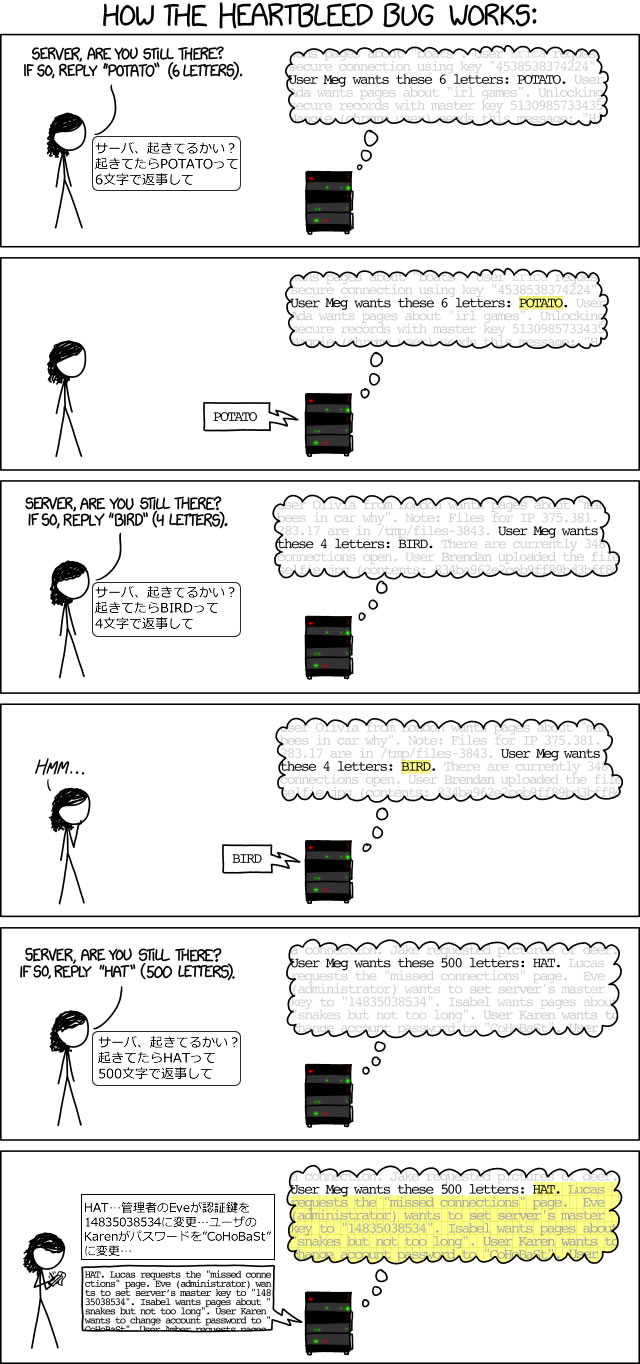 Quote: xkcd “Heartbleed Explanation”
In short, the OpenSSL server has a flaw where it returns all the characters specified in the request, and by exploiting this, it's possible to eavesdrop on any information that happens to be flowing through it. It was probably originally intended as a bug check during development, but this "loophole" remained unaddressed for over two years.
 Regarding countermeasures against Heartbleed, most of the information concerns the SSL server operators. This includes server security measures, updating private keys, and discarding (or verifying) data from previously used SSL servers. Incidentally, all the servers I manage have been addressed and are now secure.
This is a checker that makes it easy to check whether a server has Heartbleed protection, but I use LastPass's "LastPass Heartbleed CheckerI used "[this service]". It seems there are several other options available, including Japanese websites.
The server-side response is fine. But does that mean the user receiving the service doesn't need to do anything...? Of course not. They must immediately change the password they've been using.
This Heartbleed attack has affected the servers of many popular services used by many people, including Google and Facebook. Other affected services include LinkedIn, Gmail, Instagram, Dropbox, and GoDaddy. This means that many well-known service providers use OpenSSL, and their users may also be at risk. Since your password may have been intercepted, you should change it immediately.
It's important to note that this only happens after the server has implemented countermeasures against Heartbleed. Incidentally, all of the well-known service providers mentioned above have already taken these measures.
In addition, here is a page summarizing the Heartbleed countermeasures status of major servers (MashableIt's located in [location/place name], so please refer to it.